What are energy communities?
The current crisis in the electricity sector is creating further incentives to seek new solutions and models, and energy communities are one such solution.
What are energy communities?
Energy communities are groups of citizens, organisations or businesses that jointly own and manage renewable energy projects.
An energy community can be established within industrial parks, healthcare facilities, educational institutions, housing associations, community organisations, and so on.
Members of such a community establish a legal entity for the generation of electricity, including from renewable sources, and may engage in the distribution, supply, consumption, aggregation and storage of energy, the provision of energy efficiency services or electric vehicle charging services, or provide other energy services to their members.
What role do energy communities play in the context of Ukraine’s post-war reconstruction?
Planning and implementation of post-war reconstruction is already underway, including in the energy sector. In these circumstances, it is important to take into account both current needs and challenges, as well as future ones. It is precisely these considerations that underpin the discourse on ‘building back better’ and ‘green post-war reconstruction’. This applies to both electricity generation sources and transmission and distribution networks.
Energy communities could be a key tool in post-war green reconstruction. Experts believe that particularly promising areas for energy communities include the development of self-sufficient projects on newly built and rebuilt streets, in housing estates, and even in individual homes, as well as in social (particularly municipal) facilities.
Energy communities can be directly integrated into the planning of such facilities for energy supply purposes (electricity, heating and cooling).
Furthermore, energy communities can serve as an additional tool for ensuring the continuity of energy supply in times of war, and in the long term contribute to decentralisation and the development of distributed generation.
How does the law regulate the activities of energy communities?
In 2019, the EU adopted the ‘Clean Energy for All Europeans’ legislative package with the aim of facilitating the transition from fossil fuels to cleaner energy, and institutionalised the concept of two types of energy communities: community-led energy communities and renewable energy communities. At the same time, community energy initiatives have many years of experience in the EU and began operating long before the EU formalised their special status.
As for Ukraine, the status of ‘green’ energy communities is not clearly defined in national legislation at present, which is hindering their development. This is precisely why it is important to enshrine the concept of establishing energy communities in local strategic and policy documents.
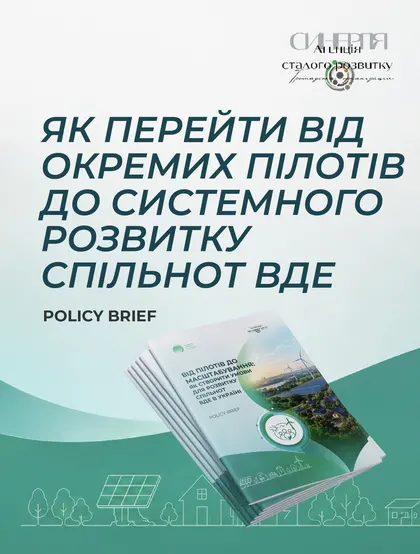
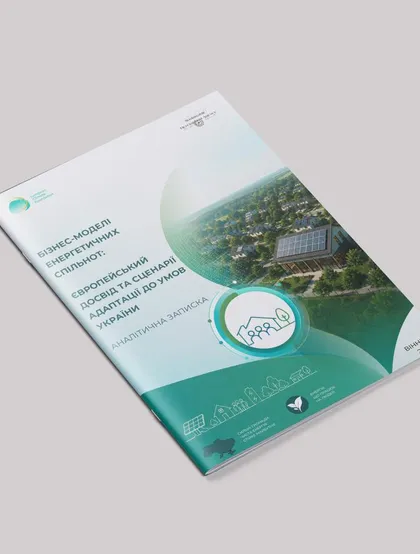
For more details on the challenges and opportunities for the development of energy communities in Ukraine, follow the link.
How can we establish the concept of creating energy communities at a local level?
We are currently working on specific solutions together with the ‘Society and Environment’ Regional Action Centre and Vinnytsia City Council, with the support of the International Renaissance Foundation.
We’ve already planned something useful for Vinnytsia – watch out for the announcement next week ;)
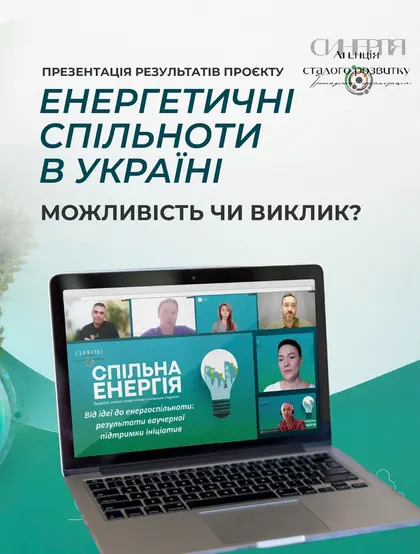
P.S. Find out more about green energy communities in the guide and podcast.