WEBINAR: POLITICAL AND SOCIAL CHANGES FOR BIOECONOMIC TRANSFORMATION
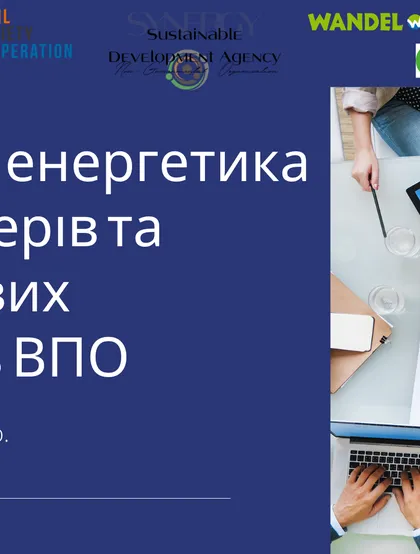
On November 1, as part of the “Building Ukraine’s Bioeconomy” project, the second webinar in a series of educational meetups took place.
Практичними знаннями і кейсами щодо політичних та суспільних змін для біоекономічної трансформації з нами поділився Олег Левченко, к.е.н. з державного Oleg Levchenko, Ph.D. in Public Administration, Director of Development at the Podil Regional Development Agency, and an expert on territorial development, shared practical insights and case studies on the political and social changes required for bioeconomic transformation.
The bioeconomy is an incredibly vast field of knowledge about the events and processes taking place in the world. It is a trend that is evolving, taking shape, and offering an opportunity to understand where exactly Ukraine stands within this framework, what we have, what challenges exist, and whether changes are needed.
There are many different definitions of the concept of the bioeconomy. But we must understand that it did not arise from the interests of individual groups or states—it is a real-time necessity.
Together with the speaker, webinar participants analyzed the European Bioeconomy Strategy, which aims to turn today’s challenges to our advantage. We discussed the finite nature of resources, using gas and nuclear energy as examples, which compels us to seek other sources and new resources, particularly renewable ones.
We understand what prompted the EU to develop the Strategy:
- a decline in the quality of natural resources,
- a decrease in the durability of goods,
- an increase in waste, and a growing impact on resources and their quality.
 The bioeconomy is, above all, about individual responsibility, innovation, safety, greater opportunities, balance, awareness, and the prudent use of resources.
Mr. Oleg highlighted a number of challenges currently facing Ukraine:
- the lack of a structured policy,
- we have only intentions, which are rather weak,
- the state is under intense pressure from monopolists.
The speaker discussed effective Ukrainian case studies in the green economy:
- Teofipol Energy Company,
- Slavuta Energy Cooperative,
- The “Vytvirnya” Project.
And then our webinar turned into an interactive session: lively discussions, debates on important issues and definitions, and the exchange of experiences and advice demonstrated just how important these topics are to the audience.
The webinar presentation is available here.
Project coordinator Viktoria Vostryakova invited participants to take part in an online survey: https://forms.gle/p5fY9WdeCkusTyhL9
.