WEBINAR: THE BIOECONOMIC TRANSFORMATION OF INDUSTRY AND BUSINESS
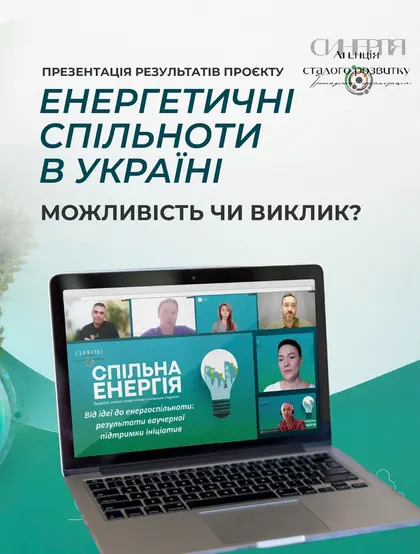
On November 3, the third and final online webinar in the series of educational meetups titled “Bioeconomic Transformation of Industry and Business” took place. The series is part of the “Building Ukraine's Bioeconomy” project, which is being implemented under the overall coordination of the program's fellow, Ph.D. in Economics Viktoria Vostryakova (Vika Zataydukh) as part of the Eastern Partnership Civil Society Facility Scholarship Program to support civil society leaders in Eastern Partnership Civil Society Facility funded by the European Union.
The webinar was divided into two parts:
- Rebuilding the Economy: Sustainability, Growth, and Combating Climate Change Through the Bioeconomy;
- The Bioeconomic Revolution: Opportunities for Startups.
Webinar speakers: Vadym Tabakera – Deputy Director and Head of the Regional Development Division of the Economic Policy Department at the Lviv Regional State Administration. Responsible for strategic planning and the development of regional development programs and projects.
Andriy Vovk – Head of the “Bioeconomy Cluster” Association, member of the Public Council at the State Forest Resources Agency of Ukraine, and member of the Public Council at the Lviv Regional State Administration. Co-author of the project: “Supporting the Innovative Development of the Bioeconomy in the Lviv Region, Taking into Account the Principles of Smart Specialization.”
Together with Vadym Tabaker, we tried to answer the question: How can we develop the bioeconomy in Ukraine?
Russia’s military aggression has had serious economic consequences worldwide, not just for Ukraine. Plans are being developed at all levels—including the international level—for the future reconstruction of the country and its economy, particularly in the post-war period. A comprehensive economic restructuring will make it possible to attract investment not only for post-war reconstruction but also for a more resilient and sustainable future. Instead of restoring the “old” fossil-fuel-based economy, post-war recovery can pave the way for a transition to a “green” economy in Ukraine.
Mr. Vadym outlined the priorities for government agencies during wartime, the key one being the modernization of the economy, which must be aligned with EU requirements. This, in particular, means adhering to best practices in climate neutrality based on smart specialization—an approach that involves regional development stakeholders making informed decisions regarding the types of economic activities and economic niches that can positively influence the growth of economic activities that are less resource-intensive.
He shared his insights on what smart specialization looks like, using the Lviv region as an example. The speaker highlighted the regional financial resource, which includes programs to support, develop, and protect key industries. He noted that Lviv Oblast is registered on the international smart specialization platform S3. Vadym Tabakera spoke about the prospects for the development of the bioeconomy in micro-regions, as well as future plans and support programs in the region, and the preparation and approval of the Smart Specialization Strategy.
Andriy Vovk spoke about smart specialization from a business perspective. He explained how and why businesses have come together to form a bioeconomy cluster. He discussed the advantages of the Lviv region in developing the bioeconomy and analyzed its structure.
The speaker shared practical case studies from the cluster that are already being implemented with the help of colleagues from the departments of economy and forestry: reducing the cost of alternative fuels used in district heating systems in the Lviv region (specifically, wood residues from logging operations) and wooden house construction. Plans were in place to create smart industrial parks, but the war has forced a change of course. The initial stages of implementing a small hydroelectric power plant on the Stryi River have been launched.
Webinar participants learned about new trends—the production of bioplastics from wood, eco-friendly packaging, the manufacture of paper from fallen leaves, and, in particular, the growing demand for biotechnology. They also shared their views on the development of the bioeconomy and practical case studies, and received expert answers to their questions from both speakers.
You can view the speakers' presentations here