This practical guide was prepared under the general guidance of experts from the non-governmental organization “SYNERGY Sustainable Development Agency” as part of the project “Green Recovery of Ukraine: Supporting the Democratization of Renewable Energy S
On May 23, the first workshop in a series of open educational webinars took place as part of the “RE-ENERGIZE UKRAINE” Summer School.
The goal of the Summer School is to build local social capacity for the energy transition and to conduct training-of-trainers sessions that will foster leadership in energy transition processes within local communities.
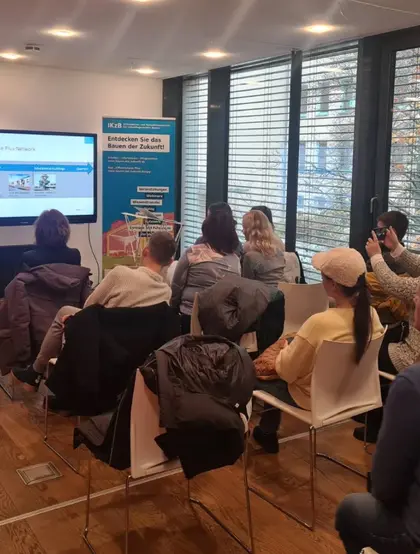
The introductory webinar covered general topics regarding the concept of energy communities, the specifics of how they function in Europe, and concrete examples that could inspire the creation of similar projects in Ukraine.
Khristina Kasyanova compared the processes currently unfolding in Europe and Ukraine and how we influence one another. Europe aims to achieve climate neutrality by 2050. To this end, a series of legislative acts and programs have been adopted. These goals are set at the European Union level. In Ukraine, it is difficult to talk about goals in the context of war, as the balance shifts with every strike by the aggressor; as of today, the majority of thermal power generation has been destroyed. Together with the speaker, we analyzed pathways to achieving climate neutrality: renewable energy sources, electrification, carbon capture, hydrogen, and energy efficiency. The renewable energy sector is in crisis due to the war and the lack of economic incentives. But Ukraine is still taking important steps in this direction. The key challenge for Europe and Ukraine today is energy independence. And this means decentralization and self-consumption as the only solution for communities to provide for themselves.
Yulia Eichhofer introduced workshop participants to the concept of energy communities and their potential. She explained the concept of energy communities, their purpose, and their advantages, and outlined seven principles for the operation of energy cooperatives. She focused on the experience of Germany, where renewable energy sources (RES) accounted for 56% of the total energy mix, with 3.5% of that electricity generated by cooperatives. She cited the example of an average energy cooperative in Germany. She shared her experience in establishing and operating the “Energieland 2025” cooperative. She cited the example of Austria and how it plans to develop its own local, decentralized renewable energy sector.
Christian Holz, one of the founders of an energy cooperative, spoke about the success stories of German energy communities. He shared practical case studies on establishing his own organization, its network, and milestones in its development. As of May 2024, the organization has 420 members, including citizens, companies, banks, the municipality, institutions, organizations, partners, and the church.
Participants heard about completed projects and achievements. They identified the benefits the community receives: jobs, sustainable energy production, economic benefits, meaningful citizen participation, regional energy procurement, and reduced strain on the municipal budget; as well as the benefits received by cooperative members: receiving dividends, participating in energy planning, using their own energy, and more. Discussed issues of support and motivation, and the establishment of shared goals.
The speakers’ presentations were relevant, engaging, and packed with practical case studies and advice. They sparked a lively discussion, and the experts provided professional answers to all questions.
You can view the speakers’ presentations here.
A video recording of the webinar is available below.